AI call analytics and manager quality scoring in Uzbekistan
How Lynx AI turns call recordings into transcripts, lead scoring, manager scorecards and quality-control dashboards for sales, support and call-center teams.
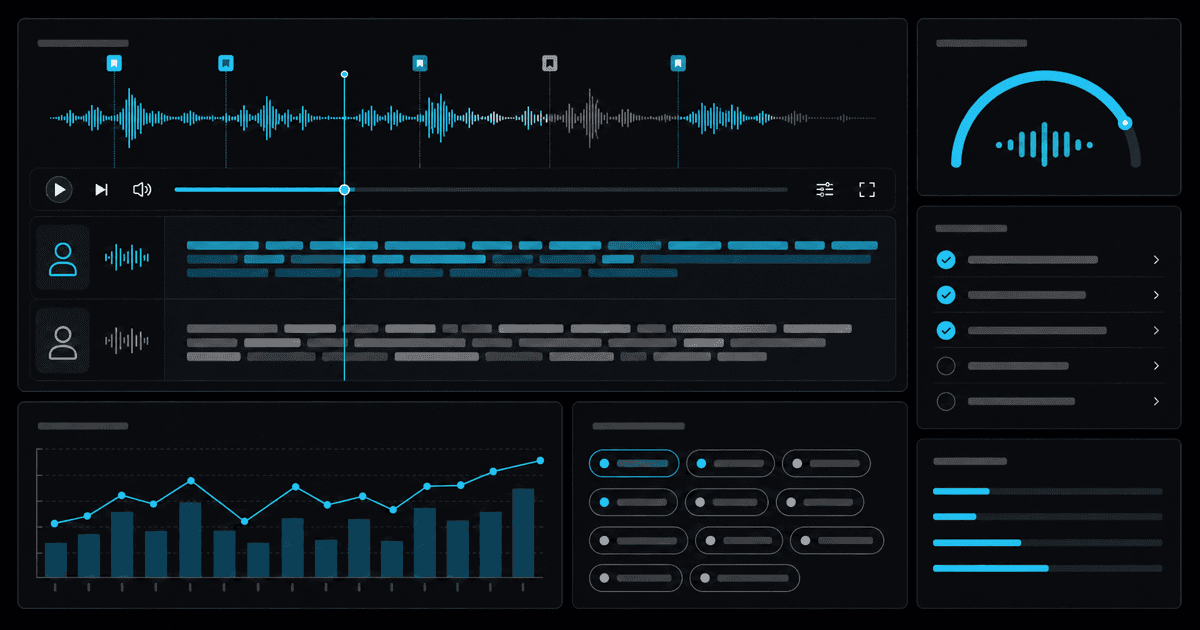
What AI call analytics solves
Most sales and support leaders cannot listen to every call. Teams usually review a small sample, while the real problems stay hidden in the audio archive: a manager did not uncover the need, skipped the next step, missed a hot lead or gave an incomplete answer.
Lynx AI turns a call into an operational business object. The recording becomes a transcript; the transcript becomes a summary, lead score, action items and a scorecard against the company script. The manager sees what happened, who handled it well and which calls need attention.
- Call transcription across Uzbek, Russian and English
- AI summary: conversation context, outcome and next actions
- Lead scoring: hot, warm or cold with reasoning signals
- Manager scorecard: what passed and what failed in the script
- Critical errors that require supervisor attention
A practical ROI model without fake promises
If a team handles 1,000 calls per month and manual review takes only 5 minutes per call, full QA requires about 83 hours. In practice, most teams do not have that time, so they listen to 2-5% of conversations and manage call quality with partial visibility.
AI changes the operating model. Every call receives a transcript, basic score, tags, lead score and an “attention required” flag. Leaders can review the weak spots, low-score calls, critical errors and the hottest leads instead of manually opening the entire archive. This is not a guaranteed sales-growth percentage; it is management control that was previously too expensive to do by hand.
- 1,000 calls × 5 minutes of manual QA = about 83 hours
- Reviewing only the 15-20% most important or problematic calls can reduce manual QA to 12-17 hours
- AI helps monitor the whole call flow instead of a small sample
- Impact is measured through script quality, next-step discipline, CRM hygiene and coaching
What a business gets after a pilot
A pilot is not just a polished demo. It uses real call recordings. We tune the scorecard to your script and show which mistakes repeat, which managers need coaching, where leads are lost and which calls the supervisor should actually review.
This is especially useful for companies with inbound demand, call centers, sales teams, service lines, recorded calls or voice AI agents. The same quality layer can compare human managers and AI agents without mixing customer lead potential with employee performance.
- Quality map across managers and AI agents
- List of calls that require supervisor attention
- Top script weak spots: greeting, needs discovery, objections, next step
- Practical recommendations for scripts, coaching and CRM workflow
- A clear decision on whether always-on call analytics makes business sense
Why this matters in Uzbekistan
Local teams often work in Uzbek and Russian at the same time, while customers switch between Uzbek Latin, Russian phrases, short answers, phone numbers, addresses, prices and live objections. A simple audio transcript is not enough. The workflow needs Uzbek-first STT connected to sales, CRM and service quality.
In the Lynx AI operating setup, customer recordings, transcripts and CRM data are stored in Uzbekistan infrastructure; access roles and retention windows are configured per project. For business teams, that means control, security, visibility and a pilot model that makes the economics clear before a full rollout.
- UZ/RU/EN in one workflow without channel breaks
- Transcripts support search, reporting, QA and coaching
- Quality control is tied to the company’s real script
- A pilot can start before a full telephony migration
Want to test call quality on real conversations?
Start with a Lynx AI pilot: upload recordings, configure a scorecard, see transcripts, lead scoring, manager ranking and concrete weak spots in your call script.